Trust With Conditions: The Research Behind Doc O'Brien's Ute Medicine Thread
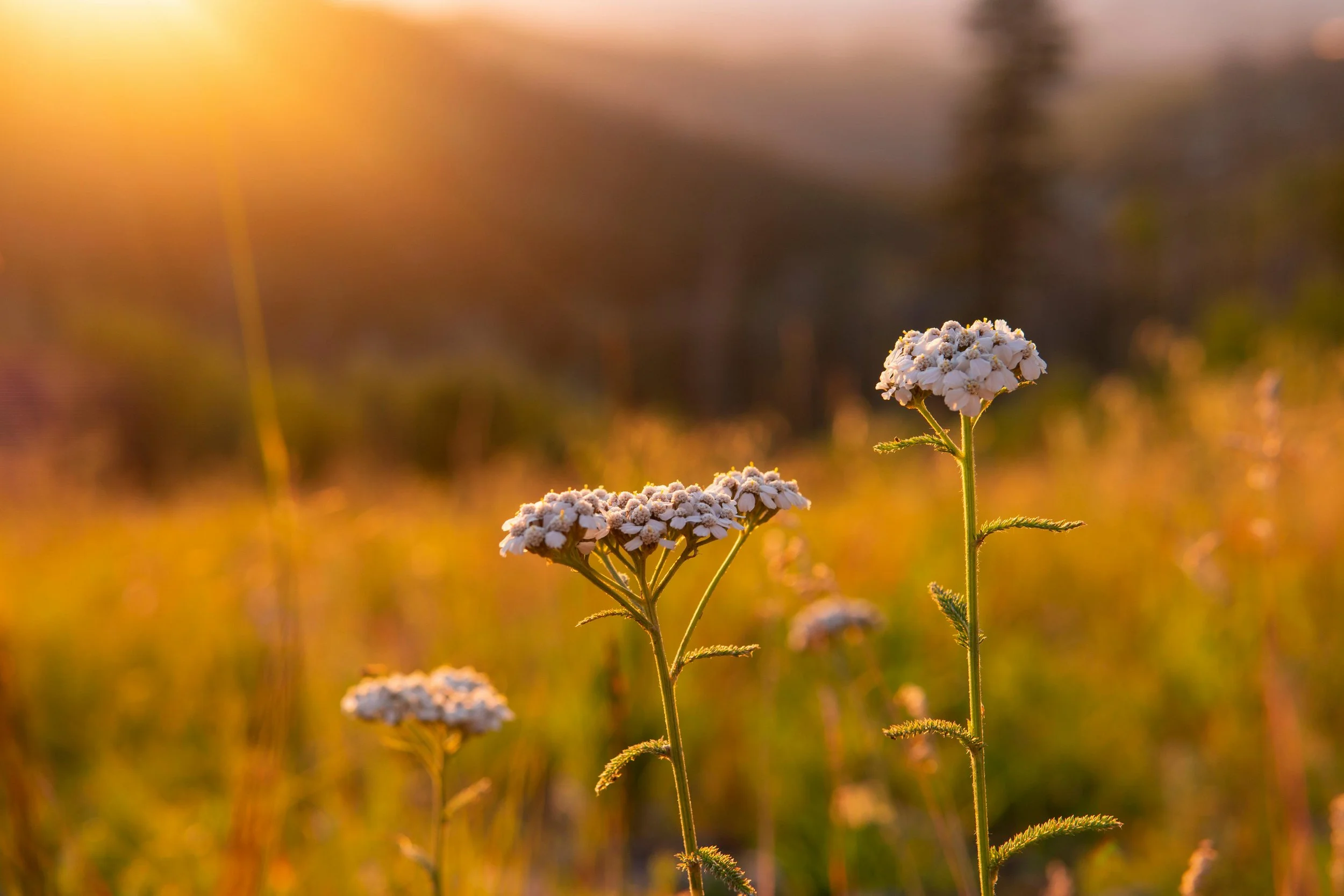
Yarrow plant, Photo by Joshua Woroniecki
How I wrote the Ute healing thread in Doc O'Brien Meets His Match — the history, the research, and why it's inseparable from the romance.
A major part of the story in Doc O'Brien Meets His Match is the Ute collaboration thread. It’s what makes the romance possible, putting Patrick and Maggie in close proximity, but that’s far from the only reason I wanted to include it.
Patrick explains to Maggie what Napho, a Ute healer, requires before he’ll allow his knowledge to be recorded. The knowledge must be set down accurately. Without spectacle. Without distortion. And it should not be stripped from its context or treated as though it belongs to the man writing it down.
That’s not the typical arrangement a reader might expect in an 1875 frontier novel. And it wasn’t accidental. “Trust with conditions” is the only honest way I could imagine this thread, and it’s what I want to explain here.
The Setting: 1870s Colorado Territory and What It Required
Buckhorn Gap, the world of this series, sits in the borderland where Ute territory and the expanding mining frontier meet. That setting, which included contact, misunderstanding, and occasional fragile trust, made it dishonest to write a novel in which the Edinburgh-trained white male doctor was the only person with real knowledge of healing. He would not have been. History books sometimes minimize the work of local people in medicine, such as women who worked as midwives and Native healers.
Patrick O’Brien is highly educated, and that matters to the story. More blog posts are coming about the watershed period in medicine he works in; the developments of the era were groundbreaking and fascinating. But the 1870s Colorado Territory was a place shaped by Ute presence as well as settler expansion. Leaving that out would have flattened the world I was trying to build.
I also had a second concern: I did not want Indigenous healing knowledge to function as atmosphere. As decoration. As something conveniently available for a white character’s growth arc. If I was going to write this thread at all, I needed to write it with respect—for the intelligence behind the knowledge, for the people to whom it belonged, and for the historical reality that this knowledge existed alongside white medicine, not beneath it. (See For Further Reading below if you are interested in learning more.)
The Historical Reality Behind Napho
Colorado in the 1870s was a hinge moment. The Brunot Agreement of 1873 had opened Ute lands—especially mineral-rich regions—to mining and settlement while offering protections that proved fragile almost immediately (a pattern repeated endlessly in the history of U.S. government-indigenous people relations.) Treaties and negotiation were still happening, but the direction of the final outcome was not in doubt—not really, not to those who were paying attention.
And Napho was paying attention. What mattered to me in writing Napho was that he is not sentimental about this. He does not, at least openly, mourn the loss of a way of life or make speeches about what is coming. He is observant, practical, and intelligent enough to see the pattern without needing the whole machinery of dispossession to be fully in place. He’s seen how it works: missionaries, schools, soldiers, the slow targeting of language and daily life, and ultimately, the loss of the land.
That’s why he also understands something with particular clarity: the white world preserves knowledge in writing. And that is where his relationship with Patrick becomes central to the book.
Frontier Medicine and Trust: How the Relationship Begins
Their collaboration begins in crisis. Napho has already treated a badly injured young man; Patrick addresses the infection that follows. Together, they save him. Afterward, they do something simple but radical for their time: they compare notes.
Patrick is explicit that wasting knowledge because of its source is foolish and bigoted. What matters is what works. He doesn’t consciously position himself as a progressive; he simply observes that Napho’s treatments had already worked, and accords him the same respect he extends to anything effective in medicine.
This kind of bridge was not the norm in the nineteenth-century West, but it was not impossible. There are historically documented instances of white physicians interacting positively with Indigenous healers. One study of Army doctors on the frontier argues that simple, close observation of Indigenous practices would have saved many lives. Patrick is unusual enough to make Napho’s trust plausible. And Napho is shrewd enough to extend it carefully, on his own terms.
That quality—shrewdness, not sentiment—is what I most wanted to protect in how I wrote him. When Patrick tells Maggie about the frostbite incident, for example, the lesson is not about a Native man generously sharing wisdom. It’s about a man with deep practical experience of his environment who knew something that Edinburgh hadn’t prepared Patrick for, and who was right. Napho corrected Patrick. Patrick listened. That’s the whole of it.
We also see who Patrick is. When recalling this incident to Maggie, Patrick says, “In that instance, it was my duty to listen and learn. A physician who refuses to learn because the lesson is inconvenient deserves his failures.” That’s why these two men can work together.
Osha and Bear Root: Plant Knowledge Grounded in Real Place
I wanted the specific botanical knowledge in the book to feel like it belonged to this landscape. Bear root—osha—is still named by the Southern Ute Tribe as an important medicinal plant, used for colds and upper respiratory ailments, and recognized as significant in their own recorded history. That mattered to me, because Patrick’s interest is not in quaint remedies. It’s in careful, testable observation: what part of the plant is used, how it is prepared, when it helps, and—just as importantly—when it does not.
Patrick subjects everything he uses to the same scrutiny. He has no patience for patent medicines (another future blog post) that harm more than they help, and no patience for dismissing something effective simply because it comes from outside his training. What Napho offers is applied knowledge, tested and revised. Patrick treats it exactly that way.
Where the Romance Meets the Research
The documentation project is also where the romance becomes inseparable from the Ute medicine thread. It is Napho who requests Maggie for the botanical illustrations—because he has seen her draw, and he calls her “the woman who sees clearly.” Patrick initially refuses on the grounds of Victorian propriety; it wouldn’t do for a young lady to be seen riding out alone with him to the Ute camp. Napho solves the problem himself, arranging for his son and daughter-in-law to escort them on every field visit.
The result is that Maggie does real scientific work: botanical illustrations accurate enough for publication, matched to Ute names and Latin taxonomy, credited under her own name. When she asks Patrick early on whether she might get a line of credit in the published work, he looks genuinely puzzled that she’d need to ask. Proper attribution of the illustrator, he tells her, is not a kindness. It’s a matter of academic integrity. The fact that she’s a woman is irrelevant; she did the work. Thus, her name goes on it.
That moment matters to the romance, but it also reflects what the Ute medicine thread is doing throughout: honest credit, given without ceremony, as a baseline expectation. The same principle that governs how Patrick treats Napho’s knowledge governs how he treats Maggie’s work. That consistency is, I think, why the two threads work together.
Writing Indigenous Knowledge in Historical Romance: What I Was Trying to Get Right
I took creative freedom in this book. It’s a novel, not a history text, and I am not a scholar of Ute culture. I did my best to be careful and respectful, and if there are any errors, I’m sorry about them—they are unintentional.
What I wanted was for that creative freedom to rest on something real: plausibility, research, and above all, the understanding that knowledge belongs to someone. Napho is not generous in an uncomplicated way. He is making a calculated decision about what can be preserved, and he is making it on his own terms. Patrick is not a savior. He is a man who happens to be open-minded enough to be trusted with something.
In the end, the Ute medicine thread and the love story ask the same question: can you cross a boundary—between two people, between two bodies of knowledge, between two worlds—without pretending the boundary isn’t there? Both Patrick and Maggie have to answer that question. So does Patrick with Napho. The answer, in each case, is the same: you can, but only with honesty, only with humility, and only if you’re willing to give credit where it is actually due.
For Further Reading
Here are some of the resources I used as well as additional readings that may be of interest.
Southern Ute Indian Tribe — History: A strong starting point for Ute history and for the continued importance of bear root/osha in healing traditions.
The Brunot Agreement — 1873 treaty resulting from increased tensions between miners and settlers over land
Nebraska History — information on Army doctors and interaction with Native healers
A Soldier Doctor of Our Army — biography by the wife of an Army doctor who interacted with indigenous healers. The book is available at this site, Google Books, and on the Internet Archive
Ute Ethnobotany — brief introduction with links
More detail on Ute ethnobotany — PDF that lists a significant number of plants and their uses by the Ute
